Beyond Marks: Why Holistic Education Matters for Today’s Children
posted on Jul 20, 2026
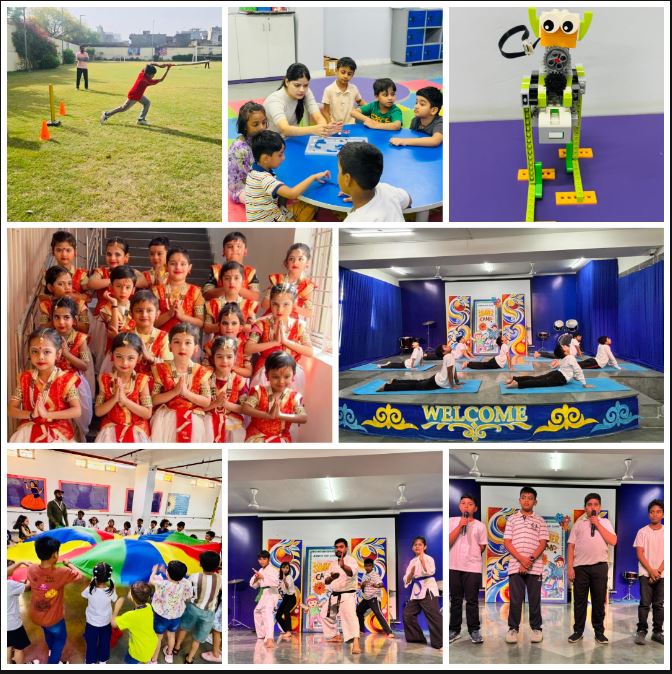
For years, academic scores have been one of the most visible measures of a child’s progress. Marks, grades, and report cards still matter, but they no longer tell the complete story.
A child may perform well in examinations and still struggle to express an idea, work in a team, manage emotions, solve an unfamiliar problem, or speak confidently in front of others.
This is why education today must go beyond textbooks.
Children need an environment that develops not only what they know, but also how they think, communicate, respond, create, and grow. This broader approach is known as holistic education, and it has become essential for preparing children for both academic success and life beyond the classroom.
What Is Holistic Education?
Holistic education focuses on the overall development of a child.
It combines academic learning with creativity, physical well-being, communication, emotional intelligence, teamwork, critical thinking, leadership, and social awareness.
The purpose is not to reduce the importance of academics. Instead, it is to strengthen academic learning by connecting it with real experiences and practical skills.
When children are encouraged to participate in sports, debates, art, group activities, experiments, presentations, and competitions, they begin to understand how knowledge can be applied.
They do not simply memorise information. They learn to question, interpret, express, and use it.
Creativity Helps Children Think Differently
Creativity is not limited to painting, music, or performing arts.
It is also the ability to look at a situation from a different perspective, explore multiple solutions, and approach challenges with imagination.
Creative activities encourage children to experiment without being afraid of making mistakes. They become more comfortable sharing original ideas and discovering their own interests.
This confidence in thinking differently can support them across subjects. A creative learner may find a new way to understand a mathematical concept, present a science project, write a story, or solve a practical problem.
Schools that provide opportunities for creative expression help children become more curious, flexible, and independent thinkers.
Sports Build More Than Physical Strength
Sports and physical activities are important for a child’s health, but their value goes much further.
Through sports, children learn discipline, consistency, resilience, teamwork, and respect. They experience both success and disappointment and gradually learn how to handle each with maturity.
A child who participates in a team game understands that individual ability matters, but cooperation is equally important. They learn to listen, support others, follow rules, and work towards a shared goal.
Regular physical activity can also improve concentration, energy levels, and emotional well-being. A balanced school experience must therefore create space for movement, fitness, and active participation.
Communication Gives Children the Confidence to Be Heard
Children may have excellent ideas, but those ideas can only make an impact when they know how to express them.
Communication skills help students speak clearly, listen carefully, ask meaningful questions, and participate confidently in discussions.
Activities such as debates, presentations, storytelling, classroom conversations, and stage performances can gradually help children overcome hesitation.
They also learn that good communication is not only about speaking. It is equally about listening, understanding different viewpoints, and responding respectfully.
At St. Xavier’s High School, Ghaziabad, opportunities such as student presentations, interactive activities, competitions, and debate platforms help learners build confidence and find their voice.
These experiences prepare children not only for academic assessments but also for interviews, higher education, leadership roles, and everyday social situations.
Emotional Intelligence Helps Children Understand Themselves and Others
A child’s emotional development is as important as intellectual growth.
Emotional intelligence is the ability to recognise emotions, understand them, manage them, and respond thoughtfully to others.
Children with strong emotional awareness are often better equipped to handle pressure, setbacks, disagreements, and change.
They learn that it is natural to feel nervous before a competition, disappointed after a loss, or uncertain in a new environment. With the right guidance, they also learn how to manage these feelings positively.
Schools play an important role in creating an atmosphere where children feel heard, supported, and respected. Such an environment helps students become more empathetic, responsible, and emotionally secure.
Teamwork Prepares Children for the Real World
Many of the most meaningful achievements in life are not individual.
They require people to work together, share responsibilities, exchange ideas, and solve problems collectively.
Group projects, team sports, classroom activities, performances, and school events help children understand the value of collaboration.
They learn how to contribute without dominating, lead without excluding, and support others without losing their own voice.
These are important life skills. Whether a child becomes a scientist, entrepreneur, artist, educator, or professional, the ability to work effectively with others will remain essential.
Critical Thinking Turns Information into Understanding
Children today have access to more information than ever before.
However, access to information does not automatically create understanding.
Critical thinking helps students analyse what they read, ask relevant questions, identify different viewpoints, and make informed decisions.
Instead of accepting every idea immediately, children learn to examine evidence, compare possibilities, and develop their own conclusions.
Science experiments, debates, problem-solving exercises, experiential learning, and classroom discussions can all support this skill.
At St. Xavier’s High School, Ghaziabad, the emphasis on participation and enquiry encourages students to move beyond passive learning. They are motivated to explore ideas, engage with concepts, and understand the reasoning behind what they study.
Why Marks Alone Are Not Enough
Marks can indicate how well a child has performed in a particular assessment, but they cannot fully measure confidence, empathy, creativity, leadership, resilience, or communication.
A report card may show what a child remembers, but not always how they respond to a challenge.
It may reflect academic achievement, but not their ability to collaborate, adapt, take initiative, or support a peer.
This does not mean academic performance should be ignored. Strong foundational learning remains important. However, when academics are supported by meaningful experiences, children are better prepared to apply their knowledge in real situations.
The objective should not be to choose between marks and skills.
The right educational approach develops both.
The Role of the School in Holistic Development
A child spends a significant part of their growing years at school. The environment they experience during this time can influence their confidence, habits, values, and outlook.
A school committed to holistic education creates opportunities for every kind of learner.
Some children may discover their strength in academics. Others may shine in sports, communication, technology, art, leadership, or creative problem-solving.
When schools recognise these different abilities, children begin to see themselves as capable learners rather than being defined by a single score.
At St. Xavier’s High School, Ghaziabad, the philosophy of Explore, Engage and Excel reflects this broader vision of education.
Students are encouraged to explore their interests, engage actively in the learning process, and work towards excellence across different areas of development.
Preparing Children Not Just for Exams, but for Life
The world children are growing into will demand more than subject knowledge.
They will need to adapt, communicate, collaborate, think independently, manage pressure, and approach challenges with confidence.
Holistic education helps build these qualities from an early age.
It ensures that children do not simply become good students, but grow into thoughtful individuals, responsible citizens, confident communicators, and lifelong learners.
For parents, the real question is not only, “How well will my child score?”
It is also, “Who will my child become?”
Admissions Open at St. Xavier’s High School, Ghaziabad
Every child deserves an education that recognises their potential beyond marks.
At St. Xavier’s High School, Ghaziabad, learning is designed to support academic progress while also nurturing creativity, communication, confidence, physical well-being, teamwork, and critical thinking.
Parents looking for a balanced, engaging, and future-ready educational environment are invited to explore the school and learn more about its approach to holistic development.
Admissions are now open.
Visit www.stxaviershighschoolghaziabad.com to learn more about admissions and campus visit opportunities.
Give your child the opportunity to explore with curiosity, engage with confidence, and excel with purpose.
